Tourist Passport vs. No-Fee Military Passport: What Military Families Need to Know
·Leave & Liberty·12 min read
In This Guide
Quick Answer: Do Military Families Need Both Passports?
Military families stationed Outside the Continental United States (OCONUS) often need both a tourist passport and a no-fee passport.
A no-fee passport is for official travel connected to government orders, such as a Permanent Change of Station (PCS), certain Temporary Duty (TDY) travel, or other official government travel. A tourist passport is for personal travel, vacations, cruises, and leisure border crossings.
A no-fee passport is not a free replacement for a tourist passport. If you are stationed overseas and want to visit another country on leave, take a family vacation, or book a personal international flight, you generally need a valid tourist passport.
Use a tourist passport for: vacations, leave travel, cruises, and personal international trips.
Use a no-fee passport for: official travel tied to PCS, TDY, or government orders.
Verify before travel: requirements vary by country, so check the Department of Defense (DoD) Foreign Clearance Guide and your installation passport office.
Important
Passport and entry rules vary by destination, assignment type, and traveler status. This guide is general information, not a substitute for your orders, country clearance rules, installation passport office guidance, or Department of State policy.
Who This Guide Is For
This guide is for military travelers trying to understand the difference between a tourist passport and a no-fee passport, especially before or during an overseas assignment.
It is most useful for:
Active-duty service members preparing for an OCONUS PCS
Military spouses and dependents
Families already stationed overseas
Reservists and National Guard members traveling on orders
DoD civilians who may receive official passports
Contractors with official travel requirements
Families planning personal travel while stationed overseas
The main goal is simple: help you know which passport to use, when to apply, and what to verify before you travel.
Key Takeaways
A tourist passport and a no-fee passport serve different purposes.
A no-fee passport is issued at no cost but is restricted to official travel.
A tourist passport is paid for by the traveler and is used for personal international travel.
Dependents on an OCONUS PCS often need a no-fee passport.
Active-duty passport requirements depend on destination, orders, and the DoD Foreign Clearance Guide.
Many families should apply for tourist passports before moving overseas.
Status of Forces Agreement (SOFA) stamps or documents are often tied to no-fee passports, but local rules vary.
Do not book leisure travel using a no-fee passport number.
Always verify current passport processing times, fees, and country entry rules with official sources.
What Is a Tourist Passport?
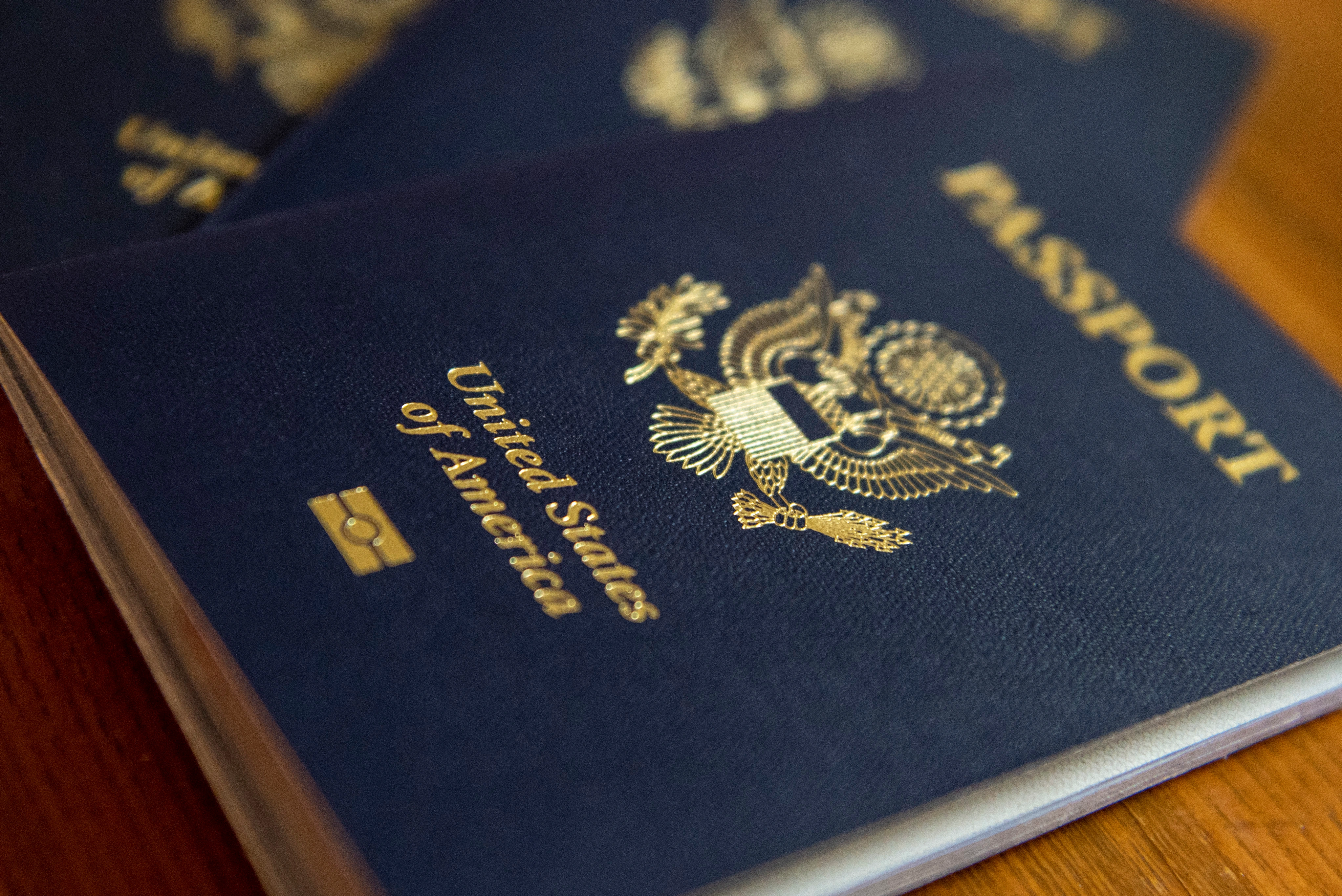
A tourist passport is the standard U.S. passport used for personal international travel. It usually has a blue cover and is the passport most Americans use for vacations, cruises, family visits, and other non-official travel.
You may also hear it called a:
Regular passport
Fee passport
Personal passport
Tourist passport
For military families, the tourist passport is the document you normally use when traveling for personal reasons, even if you are stationed overseas on official orders.
What a Tourist Passport Is Used For
A tourist passport is used for personal international travel, including:
Vacations
Leave travel
Cruises
Leisure travel to another country while stationed OCONUS
Visiting family overseas
Booking commercial international flights for non-official travel
Personal emergency travel when not traveling under official orders, depending on the situation
Example: If your family is stationed overseas and wants to visit another country on leave, the tourist passport is normally the correct passport for that leisure travel.
Who Pays for a Tourist Passport?
The traveler pays the normal Department of State passport fees.
Fees can change, so do not rely on an old blog post, social media comment, or another family’s recent experience. Before applying, check the current fees, forms, photo rules, and processing times at the official Department of State passport website: travel.state.gov.
How Long Is a Tourist Passport Valid?
For U.S. passports, adults age 16 and older generally receive passports valid for 10 years. Children under 16 generally receive passports valid for 5 years.
Always verify current validity rules with the Department of State before applying or renewing.
Note
Children’s passports expire faster than adult passports. If you are stationed overseas, track each child’s expiration date early so you are not surprised before a PCS, cruise, Space-Available trip, or family vacation.
Why Military Families Should Get Tourist Passports Before Going OCONUS
If you are preparing for an overseas PCS, it is usually smart to get tourist passports for the whole family before leaving the United States, if time allows.
Here is why:
Applying stateside is often simpler.
Overseas passport services may require embassy or consulate appointments.
Processing times can change.
Families stationed overseas often want to travel on short notice.
Some destinations require passport validity beyond the trip dates.
Children’s passports expire sooner than adult passports.
A tourist passport gives your family flexibility. A no-fee passport supports official travel, but it does not replace the personal passport you need for vacations and leisure trips.
What Is a No-Fee Military Passport?
A no-fee passport is a Special Issuance Passport issued for official U.S. government travel. It is provided at no cost to eligible travelers because the travel is connected to government orders or official duties.
For military families, no-fee passports are commonly used for OCONUS PCS travel and host-nation processing for eligible dependents.
The key point: a no-fee passport is not for personal vacation travel.
Types of No-Fee or Special Issuance Passports
Special issuance passports can include different passport types depending on the traveler’s role, orders, and assignment.
Common types include:
No-fee regular passport: Often blue, with an endorsement limiting use to official travel.
Official passport: Often red or maroon, typically used for official government travel.
Diplomatic passport: Black, used for diplomatic assignments.
Military dependents commonly receive a no-fee regular passport for OCONUS assignments. Service members, DoD civilians, and others may receive different passport types depending on their orders and position.
Entry or residency processing required by the host nation
SOFA documentation when applicable
Dependents often need a no-fee passport for an accompanied OCONUS PCS, but the exact requirement depends on the destination and local guidance.
What a No-Fee Passport Is Not Used For
A no-fee passport generally should not be used for:
Personal vacations
Leisure trips outside the host country
Personal travel while on ordinary leave
Booking commercial vacation flights
Replacing a tourist passport to save money
This is one of the most common misunderstandings for overseas military families. The passport may be free to the traveler, but it is restricted to official use.
How Long Is a No-Fee Passport Valid?
No-fee and special issuance passports are often valid for up to 5 years or tied to the official assignment period. The exact validity can depend on the passport type, traveler category, orders, and issuing guidance.
Verify your specific passport validity with your installation passport office and the Department of State.
Where Military Families Apply for No-Fee Passports
Military families usually apply for no-fee passports through an installation passport office, personnel office, or official travel office. This is different from the normal public passport process used for tourist passports.
Requirements may include:
PCS orders or a letter in lieu of orders
Passport application forms
Proof of citizenship
Passport photos
Government identification
Marriage certificate, if applicable
Birth certificates for dependents
Custody, adoption, or name change documents, if applicable
Your local passport office should tell you exactly what to bring.
Tourist Passport vs. No-Fee Passport: Key Differences Compared
Feature
Tourist Passport
No-Fee Passport / Special Issuance Passport
Main purpose
Personal international travel
Official government travel
Common use
Vacations, leave travel, cruises, leisure trips
PCS, TDY, official orders
Who pays
Traveler pays current Department of State fees
Issued at no cost to eligible travelers
Cover color
Usually blue
May be blue with endorsement, red/maroon official, or another special issuance type
Validity
Adults generally 10 years; children under 16 generally 5 years
Often up to 5 years or tied to assignment
Can be used for vacation?
Yes
Generally no
Used for OCONUS PCS?
May be needed for personal travel before or after PCS
Often required for dependents on accompanied OCONUS PCS
SOFA documentation
Sometimes, depending on local process
Often associated with no-fee passport, but varies by country
Where to apply
Department of State passport process
Military passport office or official government passport process
Installation passport office, State Department Special Issuance Agency, DoD Foreign Clearance Guide
Plain English version: use the tourist passport for personal travel. Use the no-fee passport only for official travel.
If you are stationed overseas and planning to travel for fun, the tourist passport is usually the one that matters. The no-fee passport may help establish your legal status in the host country, but it does not automatically authorize leisure travel across international borders.
Which Passport Should You Use?
Situation
Usually Use
Notes
PCS to an OCONUS duty station as a depen
No-fee passport
Verify destination requirements with the passport office and Foreign Clearance Guide
Personal vacation while stationed overseas
Tourist passport
No-fee passport generally should not be used
TDY travel
Official or no-fee passport if required
Depends on orders and destination
Leave travel to another country
Tourist passport
Check destination entry requirements
Space-A travel for leisure
Tourist passport
Requirements depend on destination and traveler status
Emergency travel
Depends on situation
Coordinate with command and embassy or consulate
Baby born overseas
Tourist passport and possibly no-fee passport
Consular Report of Birth Abroad is usually required first
Can You Use a No-Fee Passport for Vacation?
Short answer: generally no.
A no-fee passport is issued for official travel. It is not meant for ordinary leisure travel, even if you are already stationed overseas and already have the passport in hand.
Warning
Do not use a no-fee passport as a free tourist passport. A no-fee passport is for official travel only. Use a tourist passport for personal trips, vacations, cruises, and leisure border crossings. When in doubt, ask your installation passport office before booking.
Why It Matters
Using the wrong passport can create problems, including:
Airline check-in delays
Border crossing issues
Entry denial
Questions from immigration or customs officials
Passport confiscation in some situations
Command or administrative problems
Difficulty proving whether travel is official or personal
This is not about making travel harder. It is about using the right document for the right purpose.
Practical Example
Your family is stationed overseas on an accompanied OCONUS tour. Your spouse and children have no-fee passports connected to the PCS. You decide to take a long weekend trip to another country for vacation.
That trip is personal travel. The no-fee passport may support your family’s official presence in the host country, but the tourist passport is normally the correct passport for the leisure trip.
Before traveling, verify destination entry rules, passport validity requirements, and any SOFA or residency document requirements through official sources.
Do Active-Duty Service Members Need a No-Fee Passport?
The answer depends on the destination, orders, and travel purpose.
Some active-duty service members travel to certain OCONUS duty stations with a Common Access Card (CAC) and official orders. Other destinations or travel situations may require an official passport, no-fee passport, visa, or additional clearance documentation.
Do not assume that active-duty members never need passports. That is not a safe rule.
Official Source to Check
The DoD Foreign Clearance Guide is the primary official source for country-specific military travel requirements: fcg.pentagon.mil.
Full access may require CAC authentication. Your servicing passport office, unit travel office, or personnel office can help interpret requirements for your specific orders.
Important
Passport and entry rules vary by country. The DoD Foreign Clearance Guide is the official military source for country-specific requirements, and local passport offices often have destination-specific instructions. Verify before applying, booking, or traveling.
Do Military Spouses and Dependents Need a No-Fee Passport?
Military spouses and dependents often need a no-fee passport for an accompanied OCONUS PCS. This is commonly tied to entry, residency, or SOFA processing in the host nation.
But requirements vary by country. Your orders, command sponsorship status, destination, and local host-nation process all matter.
Why Dependents Should Also Have Tourist Passports
Even if dependents need no-fee passports for the PCS, they should usually also have tourist passports if the family plans to travel for personal reasons.
The no-fee passport supports official travel. The tourist passport supports personal travel.
This matters for:
Family vacations
Holiday travel
Cruises
Visiting relatives in another country
Leisure trips during school breaks
Personal travel before, during, or after an OCONUS assignment
Children’s tourist passports also expire faster than adult passports, so overseas families should track expiration dates carefully.
Practical Example
A spouse and children PCS to Japan, Korea, Italy, Germany, or another overseas assignment. They may need no-fee passports for the PCS and host-nation processing. If the family wants to take vacations outside the host country, they should also have tourist passports.
Always verify the exact rules for your destination.
The SOFA Stamp and Your Passport
Status of Forces Agreement (SOFA) rules are one of the main reasons military families hear so much about no-fee passports during an OCONUS PCS.
What Is SOFA?
A Status of Forces Agreement is an agreement between the United States and a host nation that helps define the legal status of U.S. forces and eligible family members in that country.
For military families, SOFA documentation may help show that you are legally present in the host country under your sponsor’s assignment.
Where Does the SOFA Stamp Go?
SOFA documentation is often placed in or associated with the no-fee passport, but the process varies by country and installation.
Depending on the location, SOFA proof may involve:
A stamp
A certificate
A card
A visa or residency document
Another host-nation process
If a no-fee passport is delayed, some locations may have temporary procedures. Do not assume that applies everywhere. Ask your installation passport office for current local guidance.
Why SOFA Documentation Matters for Travel
SOFA documentation may help prove your legal status in the host country. It does not automatically authorize leisure travel to other countries.
When traveling, families should carry:
The correct passport for the trip
Required SOFA or residency documents
Military identification, when applicable
Copies of orders or other documents if advised by the local passport office
How to Apply for a Tourist Passport and No-Fee Passport
Tourist passports and no-fee passports follow different processes. Many families need to manage both at the same time during an OCONUS PCS.
Step
Tourist Passport
No-Fee Passport
Start point
Department of State process
Installation passport office
Requires orders?
No
Usually yes, or letter in lieu of orders
Fees
Yes
No
Processing authority
Department of State
Department of State Special Issuance process through official channels
Best time to apply
Before OCONUS PCS if possible
As soon as eligible documents or orders are available
Documents needed
Proof of citizenship, ID, photos, forms, fees
Orders, proof of citizenship, ID, photos, forms, dependent documents
Step 1: Review Your Orders and Destination Requirements
Start with your official requirements.
Read your PCS orders.
Ask your installation passport office what dependents need.
Check the DoD Foreign Clearance Guide.
Confirm whether no-fee passports are required before travel.
Ask whether a letter in lieu of orders is accepted if final orders are delayed.
This step matters because country requirements are not the same everywhere.
Step 2: Gather Documents Early
Common documents may include:
Certified birth certificates
Marriage certificate, if applicable
Prior passports
Government ID
Passport photos
PCS orders or letter in lieu of orders
Custody documents, if applicable
Adoption documents, if applicable
Name change documents, if applicable
Your passport office may require originals or certified copies, not photocopies.
Step 3: Order Multiple Certified Copies
Tourist and no-fee passport applications may both require original or certified documents. The same documents may also be needed for school enrollment, command sponsorship, visas, housing, medical screening, or other PCS tasks.
Pro Tip
Order multiple certified copies of birth certificates and marriage certificates before your move. Do not rely on one original document for the entire PCS process.
Step 4: Apply for Tourist Passports
For tourist passports, use the official Department of State process.
If you are stateside, this may involve an authorized passport acceptance facility, depending on whether you are applying for the first time, renewing, or applying for a child.
Before applying, verify:
Current forms
Current fees
Photo requirements
Processing times
Child passport rules
Renewal eligibility
Use the official Department of State passport website: travel.state.gov.
Step 5: Apply for No-Fee Passports Through the Military Passport Office
For no-fee passports, schedule with your installation passport office or official government passport office.
Ask what you need for:
The service member
Spouse
Children
Command-sponsored dependents
Any special family situations, such as custody, adoption, or name changes
Bring your orders and all required dependent documents. Also ask how your office handles tracking, follow-up, and delivery.
Important
Processing times change. Do not rely on old timelines from friends, Facebook groups, or past PCS experiences. Check current Department of State processing times for tourist passports and ask your installation passport office about no-fee passport timelines.
Step 6: Track Expiration Dates
Track every travel document in one place.
Include:
Tourist passport expiration
No-fee passport expiration
Children’s passport expiration
SOFA documentation expiration
Visa or residency card expiration, if applicable
Military ID expiration
Driver’s license expiration, if relevant for travel
A simple spreadsheet or notes app can save a lot of stress later.
Step 7: Verify Before Booking Personal Travel
Before booking a personal international trip:
Make sure the correct tourist passport is valid.
Check destination entry requirements.
Confirm passport validity rules.
Use the tourist passport number when booking leisure travel.
Verify whether you need to carry SOFA or residency documentation.
Check whether your destination has visa, electronic travel authorization, or transit requirements.
Some destinations require passport validity beyond the dates of travel. Do not assume a universal rule applies everywhere. Check the destination’s official entry requirements.
Common Mistakes OCONUS Military Families Make
Mistake 1: Assuming the No-Fee Passport Works for Vacation
This is the big one.
A no-fee passport is for official travel. If your family is taking a personal vacation, use tourist passports.
Mistake 2: Waiting Until After Arrival OCONUS to Apply for Tourist Passports
You may be able to apply overseas through a U.S. embassy or consulate, but appointments and processing can take time. If you know your family wants to travel while stationed overseas, apply for tourist passports before you move when possible.
Mistake 3: Sending the Only Certified Birth Certificate With One Application
Passport applications may require original or certified documents. If you send your only certified copy with one application, you may delay another passport application or PCS task.
Order extras early.
Mistake 4: Booking Leisure Flights With the No-Fee Passport Number
When booking personal travel, use the tourist passport information. Booking a vacation with a no-fee passport number can create problems at check-in, border control, or immigration.
Children under 16 generally receive passports valid for 5 years, not 10. Overseas families should check children’s passport dates well before school breaks, summer travel, PCS season, or Space-A travel.
Mistake 6: Assuming Rules Are the Same in Every Country
OCONUS passport and SOFA rules vary by country. What worked for a friend in Germany may not apply in Japan, Korea, Italy, the United Kingdom, or another location.
Use official guidance for your destination.
Mistake 7: Not Checking Passport Validity Rules Before Travel
Some countries require a passport to be valid beyond the dates of travel. Others may have different entry, visa, or electronic authorization requirements.
Check before booking, and check again before departure.
Special Situations
Babies Born OCONUS
Babies born overseas commonly need several documents before international travel is possible.
These may include:
Consular Report of Birth Abroad (CRBA)
Tourist passport
No-fee passport, if eligible and required
Local birth documents
SOFA or residency documentation
The CRBA and passport process usually involves the nearest U.S. embassy or consulate. Travel may be limited until the documents are issued.
Check the official U.S. embassy or consulate website for your country and ask your installation passport office what applies to your situation.
Emergency Leave
Emergency travel can be stressful, especially overseas.
Depending on the situation, emergency leave may involve coordination with:
Command
Installation passport office
U.S. embassy or consulate
Airline
Host-nation authorities
Emergency passport options may exist, but rules depend on the traveler, destination, documents, and circumstances. Do not assume you can use a no-fee passport for personal emergency travel without official guidance.
DoD Civilians and Contractors
DoD civilians may receive official passports depending on their position, orders, and travel requirements. Contractors may have different rules based on their contract, employer, and host-nation requirements.
The main principle still applies: official-use passports are for official travel, not personal vacations.
DoD civilians and contractors should verify requirements with:
Employer or contracting office
Installation passport office
Travel office
DoD Foreign Clearance Guide
U.S. embassy or consulate, if applicable
Space-Available Travel
Space-Available (Space-A) travel adds ano
ther layer because passport requirements depend on destination, traveler status, and whether the travel is official or personal.
For international Space-A travel for leisure, a tourist passport is generally the safer expectation. If travel is connected to official orders, a no-fee or official passport may apply depending on the orders and destination.
Before flying, check the passenger terminal guidance, destination entry rules, and your passport type.
Pre-PCS Passport Checklist
Use this checklist before an OCONUS PCS or before booking personal travel overseas.
Check the DoD Foreign Clearance Guide for your destination.
Contact your installation passport office.
Confirm whether dependents need no-fee passports.
Apply for tourist passports for each family member.
Order multiple certified copies of birth certificates and marriage certificates.
Gather PCS orders or letter in lieu of orders.
Schedule no-fee passport appointments.
Verify current Department of State forms and fees.
Confirm passport photo requirements.
Track passport and SOFA expiration dates.
Use tourist passport information when booking leisure travel.
Recheck destination entry requirements before every international trip.
Bottom Line
Before booking travel, verify your passport requirements with your installation passport office and the DoD Foreign Clearance Guide. The right answer depends on your destination, orders, traveler status, and reason for travel.
Official Sources to Bookmark
Bookmark these sources before an OCONUS PCS or overseas vacation.
Local installation passport office: Best source for your base, destination, appointment process, and SOFA procedures.
U.S. embassy or consulate website for your host country: Overseas passport services, CRBA information, emergency services, and local instructions.
Do military families need both a tourist passport and a no-fee passport?
Often, yes, especially for OCONUS assignments. The no-fee passport is for official PCS-related travel and host-nation processing when required. The tourist passport is for personal travel, vacations, cruises, and leisure border crossings. Verify requirements based on your destination and orders.
Can I use a no-fee passport for vacation?
Generally no. No-fee passports are restricted to official travel. For leisure travel, use a tourist passport and verify destination entry requirements before booking.
What happens if I use my no-fee passport for personal travel?
You could run into airline, border, customs, immigration, or administrative problems. The exact outcome depends on the country and situation, so avoid guessing. If you are unsure which passport to use, contact your installation passport office before traveling.
Do active-duty service members need a no-fee passport?
It depends on the dest
Do military spouses need a no-fee passport for an OCONUS PCS?
Often yes for accompanied OCONUS assignments, but requirements vary by country. Spouses and dependents should confirm requirements with the local military passport office as soon as PCS planning begins.
Can I apply for a tourist passport and no-fee passport at the same time?
Often, yes, but they follow different processes. Tourist passports use the public Department of State passport process. No-fee passports usually go through the installation passport office. Plan carefully because both applications may require original or certified documents.
Where does the SOFA stamp go?
SOFA documentation is often placed in or associated with the no-fee passport, but the process varies by country and installation. Some locations may use a stamp, certificate, card, visa, or other document. Confirm with your installation passport office.
Can I travel Space-A with a no-fee passport?
If the Space-A travel is connected to official orders and the no-fee passport is authorized for that travel, it may apply. For leisure Space-A travel, travelers generally need a tourist passport for international travel. Check passenger terminal guidance and destination entry requirements.
Do babies born overseas need both passports?
Babies born overseas commonly need a Consular Report of Birth Abroad, a tourist passport, and possibly a no-fee passport depending on eligibility and assignment requirements. International travel may be limited until documents are issued.
Do I have to surrender my no-fee passport when I PCS back to the United States?
Rules may depend on passport type, issuing agency guidance, and local procedures. Ask the issuing military passport office what to do. Do not continue using a no-fee passport for personal travel.
Final Thoughts
For most OCONUS military families, the safest planning assumption is that you may need both passports: a no-fee passport for official travel tied to orders, and a tourist passport for personal international travel.
The most important thing to remember is that a no-fee passport is not a free tourist passport. It has a specific official purpose, and using the wrong passport can create problems at check-in, at the border, or with your command.
Before you apply or book travel, take three practical steps:
Confirm your destination requirements with your installation passport office.
Check the DoD Foreign Clearance Guide for official military travel requirements.
Verify current Department of State passport forms, fees, and processing times.
A little document planning before an OCONUS PCS can save your family a lot of stress later.
Leave & Liberty
Part of the Leave & Liberty editorial team — dedicated to helping military families travel more, spend less, and live free.
Join military travelers and families receiving Space-A guides, travel perks, destination ideas, and smart strategies to help you travel more for less.
No spam. Unsubscribe anytime.
tourist passport no-fee passport military travel OCONUS PCS
Editorial Independence
Our opinions are our own. Compensation may impact placement but does not influence our editorial recommendations.
Cookie Preferences
We use cookies to understand how you use our site and to improve your experience. By clicking "Accept All," you consent to analytics cookies. Privacy Policy · Cookie Policy